
Most design engineers overlook polyphthalamide (PPA resin) until standard PA66 or generic high‑temp nylon fails under real‑world combined heat, humidity and chemical attack. As a semi‑aromatic high‑performance polyamide, PPA balances heat resistance, low‑moisture dimensional stability and fluid resistance — yet many buyers struggle with grade selection, inconsistent lot quality and supply bottlenecks for glass‑filled PPA for automotive electronics, SMT‑capable PPA connectors and hydrolysis‑resistant PPA for EV cooling components.
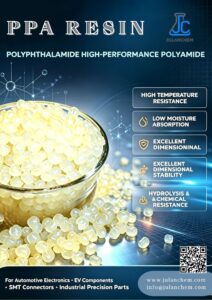
Global sourcing inquiries keep rising for niche requirements: PPA GF30 for under‑hood sensors, non‑halogen flame‑retardant PPA for high‑voltage modules, and low‑warp PPA for thin‑wall miniaturized connectors that survive 260 °C lead‑free reflow soldering. Unlike conventional aliphatic nylons, well‑formulated PPA delivers minimal creep and limited moisture‑driven swelling, critical when tight tolerance overrides raw‑material unit cost.
Common procurement headaches remain: unreliable certification documents, unclear REACH compliance, insufficient technical support for injection‑molding parameters, and long lead‑times for specialty modified grades. Many end‑users mistakenly pick PPA only based on heat‑deflection temperature while ignoring long‑term hydrolysis performance in coolant‑exposed assemblies, leading to premature field cracking and costly redesign cycles.
When you evaluate PPA resin for metal replacement projects, focus not only on HDT figures but on actual conditioned data: hydrolysis resistance, moisture absorption rate, mould shrinkage consistency and full COA traceability. Matching exact compound formulation to operating media, peak temperature and dimensional tolerance prevents over‑specification and unexpected production scrap.
For OEMs, compounders and plastic distributors hunting cost‑competitive qualified PPA pellets, verified manufacturers with complete UL, REACH documentation and application‑grade custom‑compounding capability reduce project risk far more than spot‑price savings. PPA will keep expanding across e‑mobility, power electronics and industrial precision hardware — provided buyers select grades built for real‑life harsh operating conditions, not just datasheet numbers.
Julanchem-PPA resin is mainly a PA6T copolymer.It features outstanding mechanical strength,low water absorption and stable performance,making it an ideal material for a wide range of application fields.
What challenges are you facing right now? Come and discuss with our Julanchem team!