Environmentally Friendly Peptizer DBD: The Superior Alternative to Traditional Thiophenol-based Peptizers
For rubber manufacturers striving for sustainability, operational safety, and product quality, selecting the right peptizer is critical. Traditional thiophenol-based peptizers have long been used in rubber processing, but their inherent drawbacks in environmental compliance, safety, and long-term cost-effectiveness have become a bottleneck for export-oriented and high-end rubber production.
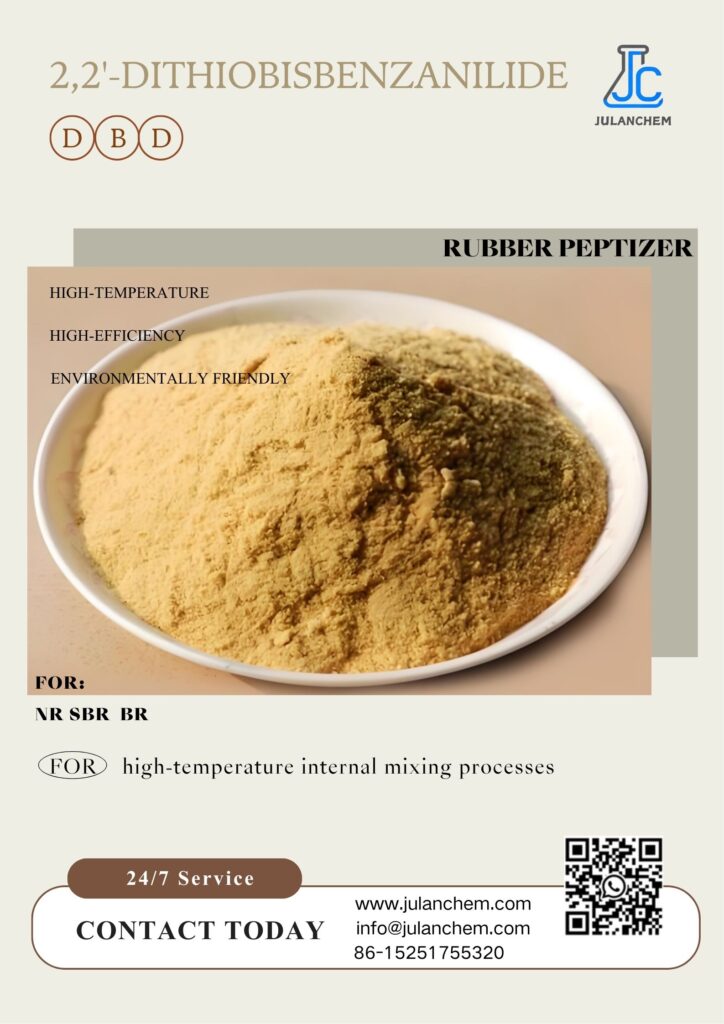
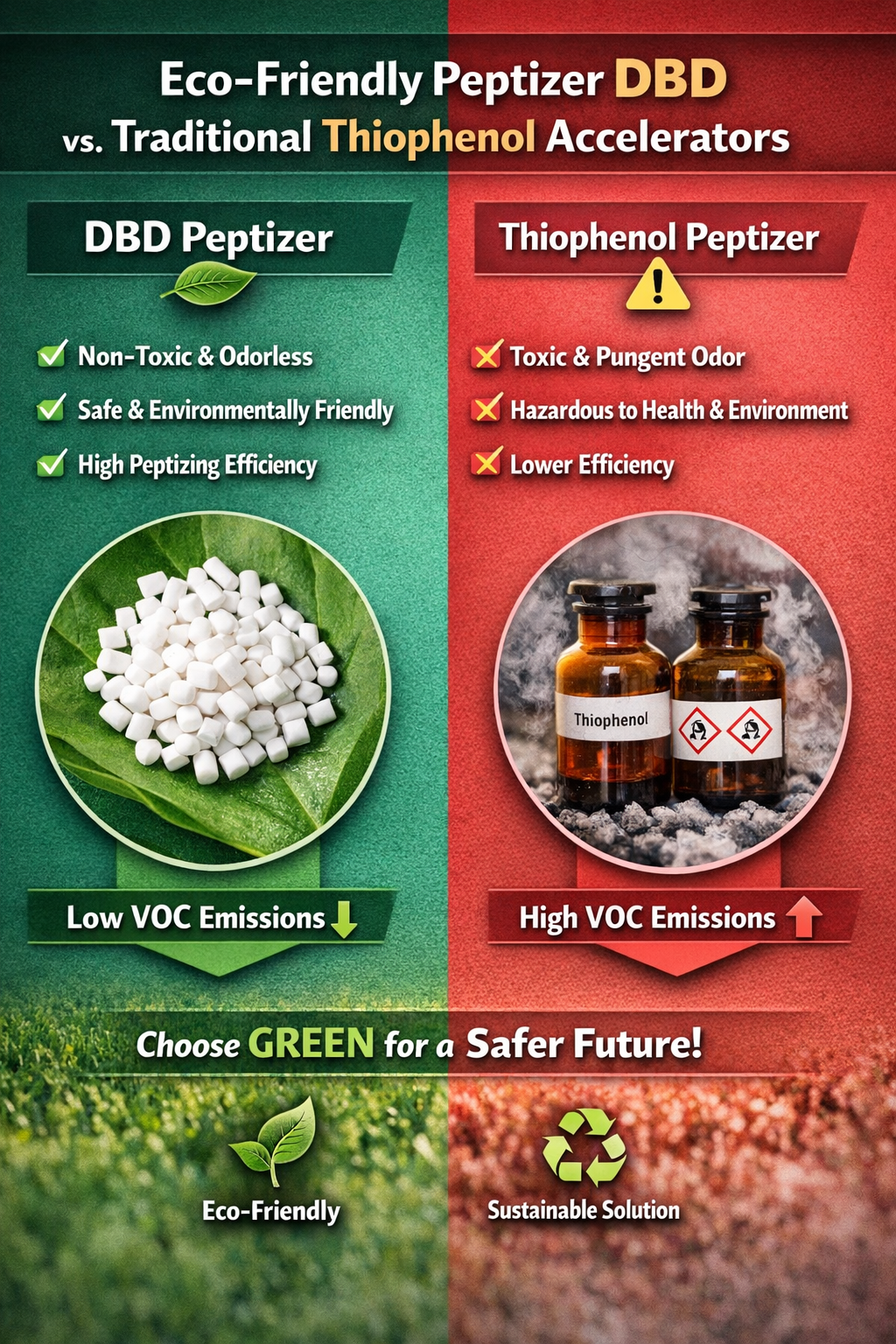
Environmentally Friendly Peptizer DBD emerges as the mainstream replacement solution, offering a perfect balance of performance, eco-friendliness, and economic efficiency. Below is a detailed comparison to showcase why DBD is the smarter choice for your rubber processing needs:
| Comparison Dimension | Environmentally Friendly Peptizer DBD | Traditional Thiophenol-based Peptizers |
|---|---|---|
| Chemical Profile | Non-thiophenol formulation; free of toxic phenol and sulfur-containing groups; derived from green feedstocks | Composed of alkylphenol sulfides; contains hazardous thiophenol functional groups and aromatic ring structures |
| Environmental Compliance | – Fully meets EU REACH, RoHS, and China GB/T 20384 standards- Low bio-toxicity; no bioaccumulation in ecosystems- Naturally biodegradable, no persistent pollution residues | – Contains toxic sulfides that generate harmful byproducts during production/use- Poor biodegradability, causing soil and water contamination- Restricted in major global markets due to non-compliance with green regulations |
| Operational Safety | – Low volatility; no pungent odor; non-irritating to skin and respiratory tract- Non-flammable and non-explosive under normal storage conditions- Eliminates occupational health risks for workers | – High volatility with a strong, unpleasant odor- Irritates skin and mucous membranes; prolonged contact may cause dermatitis and respiratory illnesses- High fire and explosion risks, requiring strict explosion-proof storage facilities |
| Peptization Performance | – Moderate, controllable peptization speed; softens rubber uniformly without damaging molecular chains- Excellent compatibility with NR, SBR, BR, and other rubber types- Enhances rubber processing fluidity while preserving the tensile strength, wear resistance, and elasticity of final products | – Fast but unregulated peptization; easily causes over-degradation of rubber molecular chains- Poor compatibility with some synthetic rubbers, leading to product discoloration- Long-term use reduces the mechanical properties of rubber products |
| Storage Stability | – Stable for 12–18 months under normal temperature and sealed conditions- Non-hygroscopic and non-caking; no special anti-corrosion packaging required | – Prone to oxidation and deterioration when exposed to air- Hygroscopic and easy to agglomerate; requires vacuum packaging and low-temperature storage- Short shelf life (only 6–8 months), leading to frequent material waste |
| Application Scope | – Ideal for green rubber products: food-contact rubber parts, medical rubber devices, daily-use rubber goods- Perfect for high-end rubber processing with strict environmental requirements (export-oriented manufacturing) | – Limited to low-end rubber products with loose environmental standards- Gradually phased out in export supply chains due to regulatory restrictions |
| Cost-Effectiveness | – Slightly higher unit price, but eliminates additional costs for waste gas/water treatment- No risk of environmental fines; reduces long-term operational costs- Improves product competitiveness in premium markets | – Low upfront unit cost, but requires heavy investment in environmental treatment systems- High hidden costs (fines for non-compliance, production delays due to storage issues)- Limits market access for export products |
Why Choose DBD Peptizer?
✅ Regulatory Compliance: Unlocks access to EU, North American, and other high-standard markets.
✅ Safety First: Protects your workers and production facilities from hazards.
✅ Quality Assurance: Maintains consistent rubber product performance and durability.
✅ Cost Efficiency: Lowers overall operational costs by cutting environmental treatment expenses and waste losses.
Typical Applications of DBD Peptizer
- Tire compounds (NR, SBR, BR)
- Industrial rubber products
- Rubber sheets, hoses, belts
- Footwear and molded rubber goods
Contact us today to request a free sample of DBD peptizer and elevate your rubber production to a new level of sustainability and profitability!