PBAT vs PBST: Choose the Right Biodegradable Mulch for Your Climate & Crop
As the core of biodegradable agricultural mulch materials, PBAT and PBST are independently developed and industrialized by Chinese enterprises, breaking through the bottleneck of traditional PE mulch pollution and solving the pain points of unstable performance of common biodegradable mulch in extreme environments. With certified quality, controllable degradation and stable supply, we provide customized mulch solutions for global farmers, helping you comply with environmental policies, reduce labor costs and stabilize crop yields.
Our PBAT & PBST mulch films have passed international authoritative tests, meeting the strict standards of EN 17033 and ISO 17556, and are widely used in more than 20 countries and regions such as Southeast Asia, the Middle East, Europe and South America, winning unanimous recognition from global buyers.
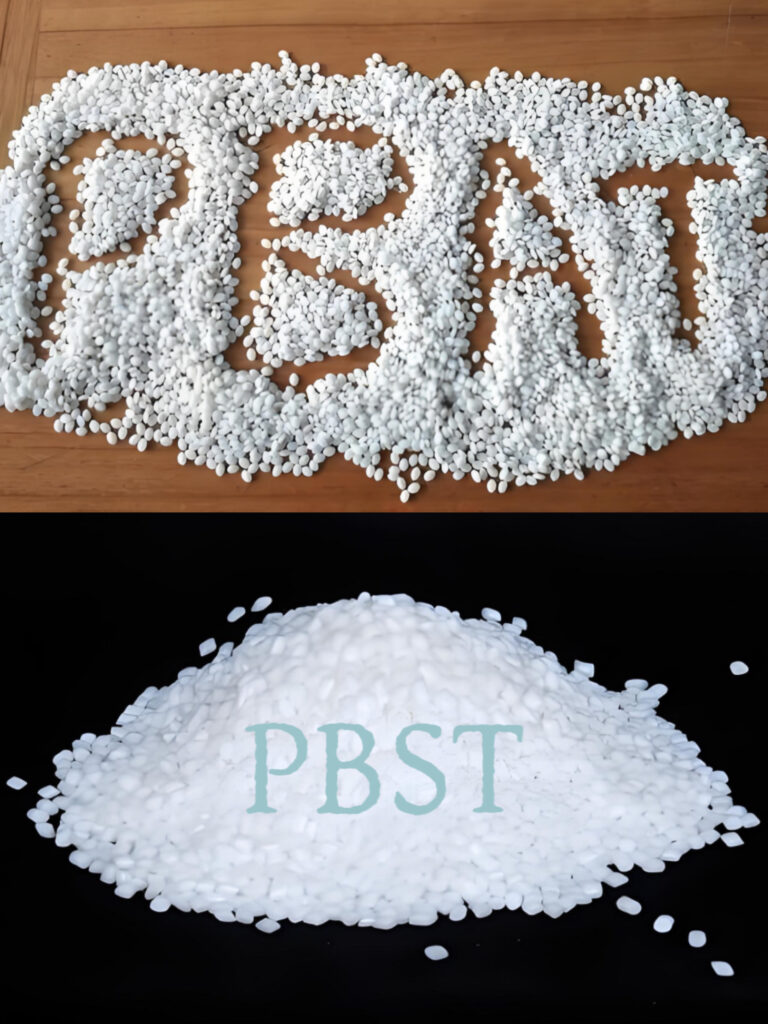
1. PBAT (Poly(butylene adipate-co-terephthalate))
Core Application Advantages
- Excellent flexibility & processabilityOutstanding ductility, tear resistance, and low-temperature toughness, suitable for mechanized laying and compatible with conventional film-blowing equipment.
- Mature biodegradabilityFully degradable into CO₂ and water under soil microbial action, eliminating microplastic pollution and replacing traditional PE mulch films.
- Controllable degradation cycleDegradation rate can be tuned to match short growing cycles (3–6 months), avoiding early breakage while eliminating manual recycling.
- Reliable agronomic performanceEffective heat preservation, moisture retention, and weed suppression, ideal for vegetables, rice, strawberries, and other short-season crops.
- Mature industrialization & cost efficiencyMature production technology, stable supply, and relatively lower cost, supporting large-scale promotion.
2. PBST (Poly(butylene succinate-co-terephthalate))
Core Application Advantages
- Higher mechanical strength & durabilityHigher crystallinity, tensile strength, and rigidity; more resistant to wind, sand, and mechanical damage during long-term field use.
- Superior weather & UV resistanceMuch more stable under strong sunlight and high temperatures, delaying early degradation in hot and arid regions.
- Better heat resistance & barrier propertiesImproved water-vapor barrier and heat resistance, providing longer-lasting soil moisture and temperature maintenance.
- Suitable for long growth-cycle cropsIdeal for cotton, corn, fruit trees, and other crops requiring mulch protection for more than 6 months.
- Eco-friendly & controllable degradationFully biodegradable within 1–3 years, with adjustable degradation profiles for different climates and cropping systems.
3. Quick Comparative Summary
| Aspect | PBAT | PBST |
|---|---|---|
| Flexibility | Excellent | Good |
| Mechanical strength | Moderate | High |
| UV & weather resistance | Good | Excellent |
| Heat & moisture barrier | Good | Better |
| Degradation tuning | Short-cycle optimized | Long-cycle optimized |
| Cost & maturity | Lower cost, highly mature | Slightly higher cost, fast-growing |
| Typical crops | Vegetables, rice, strawberries | Cotton, corn, long-season crops |
| Best climate | Moderate temperature & sunlight | Strong sun, high temperature, windy areas |