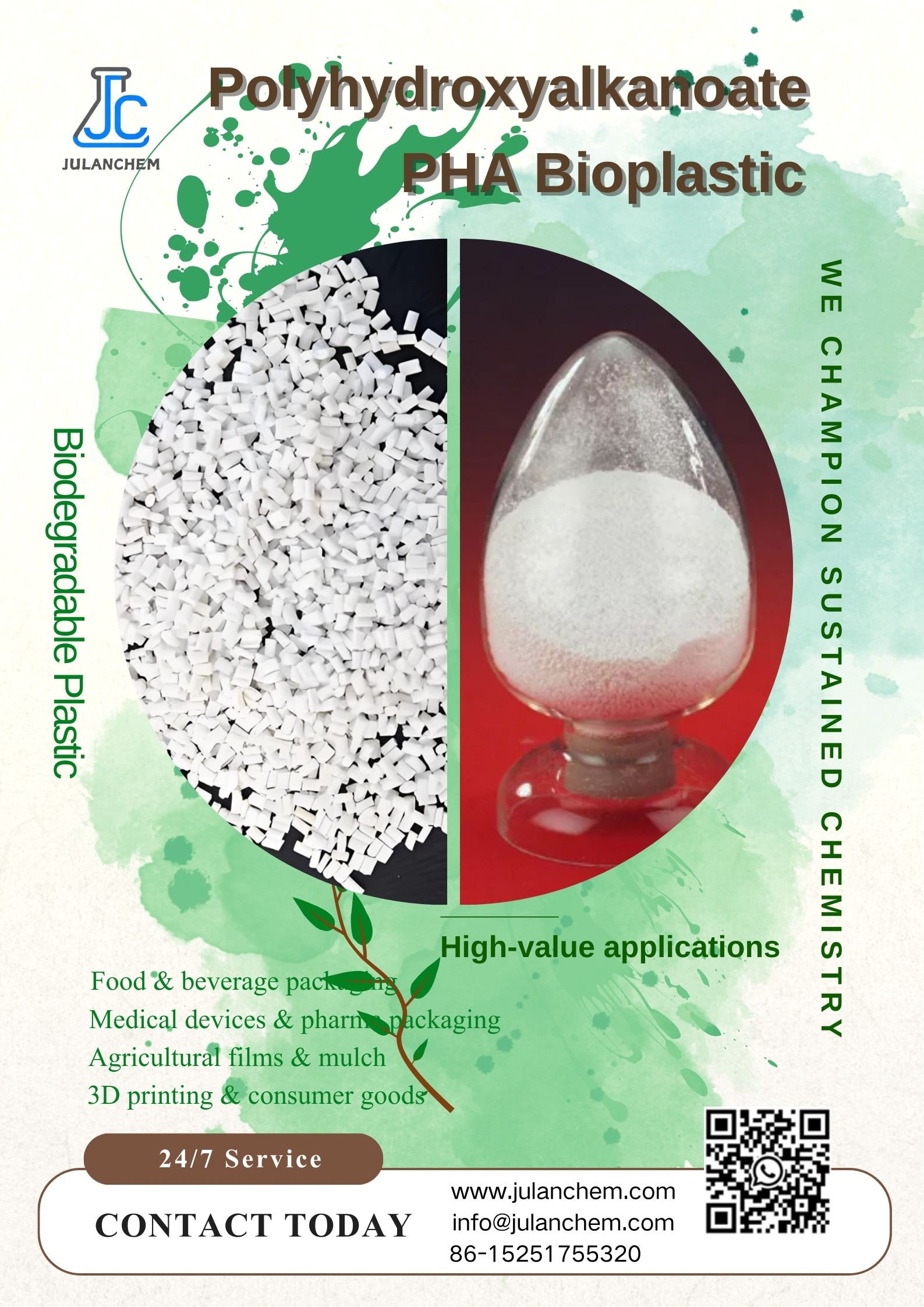
Polyhydroxyalkanoates (PHA) — Biodegradable, High-Barrier Bioplastic for Packaging & Medical Use
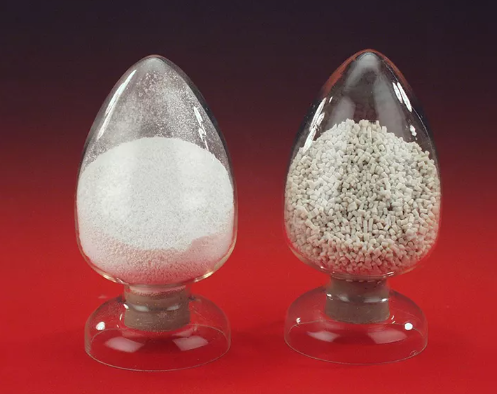
What is PHA?
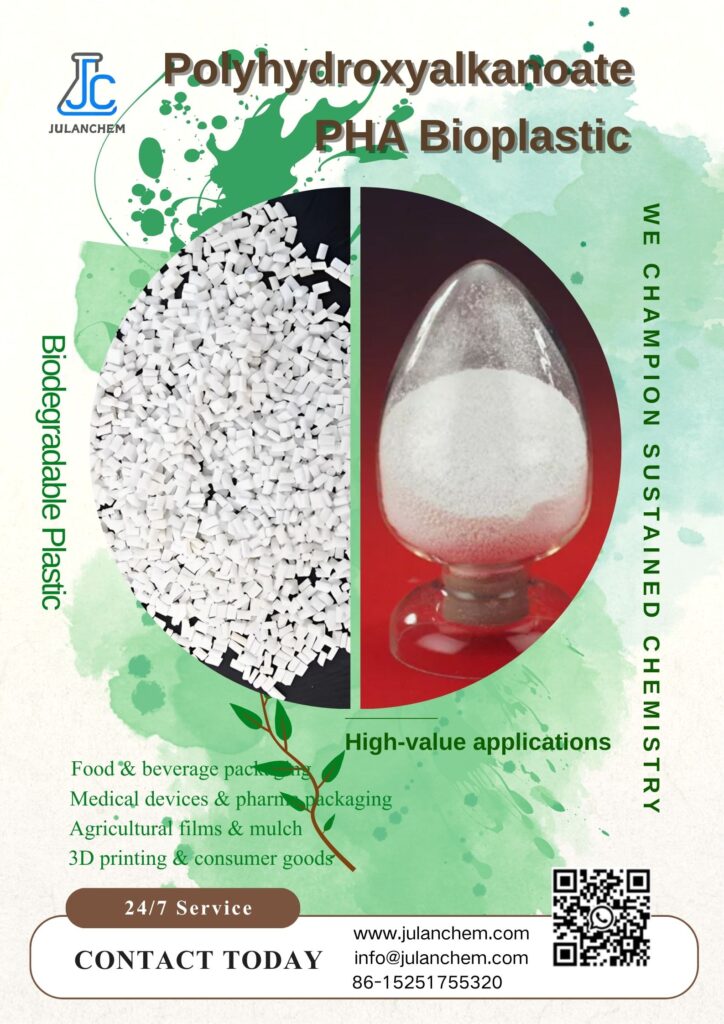
Polyhydroxyalkanoates (PHAs) are a family of 100% bio-based, microbially produced polyesters that behave like conventional thermoplastics but biodegrade naturally in soil, marine and industrial composting conditions. PHAs combine tunable mechanical properties with proven biocompatibility, making them attractive for both single-use packaging and medical applications.
Why international buyers choose PHA?
1.True biodegradability across environments
Unlike some “compostable” plastics that need industrial conditions, many PHA grades can biodegrade in multiple environments (industrial compost, soil and certain marine conditions), reducing end-of-life risk and regulatory exposure.
2.Biocompatibility for medical & personal-care uses
PHA’s natural origin and biocompatibility make it suitable for sutures, tissue scaffolds and controlled-release systems — applications where safety and predictable degradation are essential.
3.Excellent barrier & mechanical performance for packaging
Certain PHA formulations offer strong barrier properties to moisture and gases compared with other bioplastics, helping extend shelf life for food and pharmaceutical packaging. These barrier advantages make PHA a practical drop-in alternative for many flexible and rigid packaging formats.
4.Feedstock flexibility & circular production pathways
PHAs can be produced from sugar feedstocks, waste streams or even biogas, enabling low-carbon and waste-valorization production models that align with corporate sustainability goals. This “waste-to-wealth” approach is becoming commercially viable as processes mature.
5.Growing market support & scaling investment
Demand and production capacity for biobased plastics are expanding rapidly as brands and regulators shift toward sustainable packaging; PHA is receiving increased investment and capacity growth from producers worldwide.
Is PHA compostable?
Many PHA grades are certified compostable under industrial conditions and can biodegrade in soil and some marine environments — certification and actual degradation depend on grade and environment.
How does PHA compare to PLA?
PHA generally offers better biodegradation profiles and superior barrier properties, while PLA has been more widely available and cheaper historically; selection depends on performance needs and end-of-life requirements.
Can PHA be made from waste feedstock?
Yes — industrial pilots and commercial plants produce PHA from organic waste streams and even biogas, supporting circular economy goals.
If you’re evaluating sustainable polymers for packaging or medical products, start with a technical trial: request a sample grade, a datasheet etc. We can connect you with certified PHA grades matched to barrier, mechanical and regulatory needs — and help run cost-performance comparisons versus PLA and fossil polymers.
Ready to test Biodegradable PHA in your product line?
Contact us(JULANCHEM:sustainable packaging PHA supplier in China) to request samples, TDS,application case studies and a procurement plan optimized for lead time and sustainability targets.